
Freakonomics: A Rogue Economist Explores the Hidden Side of Everything

Author: Steven D. Levitt
Which is more dangerous, a gun or a swimming pool? What do schoolteachers and sumo wrestlers have in common? Why do drug dealers still live with their moms? How much do parents really matter? What kind of impact did Roe v. Wade have on violent crime? Freakonomics will literally redefine the way we view the modern world., , These may not sound like typical questions for an econ….Read More

10 Books Similar to Freakonomics: A Rogue Economist Explores the Hidden Side of Everything
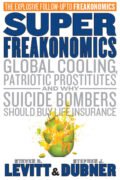
SuperFreakonomics: Global Cooling, Patriotic Prostitutes And Why Suicide Bombers Should Buy Life Insurance
The New York Times best-selling Freakonomics was a worldwide sensation, selling over four million copies in thirty-five languages and changing the way we look at the world. Now, Steven D.… Continue Reading Posted in: Bibliography, Economics Psychological Aspects, Sociological Aspects
Think like a Freak: The Authors of Freakonomics Offer to Retrain Your Brain
The New York Times bestselling Freakonomics changed the way we see the world, exposing the hidden side of just about everything. Then came SuperFreakonomics, a documentary film, an award-winning podcast,… Continue Reading Posted in: Cognitive Psychology, Problem Solving
The Undercover Economist
Who makes most money from the demand for cappuccinos early in the morning at Waterloo Station? Why is it impossible to get a foot on the property ladder? How does… Continue Reading Posted in: Bibliography, Makroã¶Konomie, Popular Works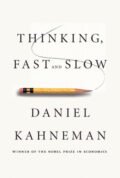
Thinking, Fast and Slow
In the highly anticipated Thinking, Fast and Slow, Kahneman takes us on a groundbreaking tour of the mind and explains the two systems that drive the way we think. System… Continue Reading Posted in: Bibliography, Decision-Making & Problem Solving, Judgment, Medical Cognitive Psychology, Reasoning
An Inquiry into the Nature and Causes of the Wealth of Nations
Adam Smith's masterpiece, first published in 1776, is the foundation of modern economic thought and remains the single most important account of the rise of, and the principles behind, modern… Continue Reading Posted in: Classical School Of Economics, Work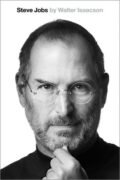
Steve Jobs
Based on more than forty interviews with Jobs conducted over two years--as well as interviews with more than a hundred family members, friends, adversaries, competitors, and colleagues--Walter Isaacson has written… Continue Reading Posted in: Bibliography, Biography, Businesspeople
Blink: The Power of Thinking Without Thinking
Blink is about the first two seconds of looking--the decisive glance that knows in an instant. Gladwell, the best-selling author of The Tipping Point, campaigns for snap judgments and mind… Continue Reading Posted in: Bibliography, Intuition [Mesh]
The Tipping Point: How Little Things Can Make a Big Difference
An alternate cover edition exists here.The tipping point is that magic moment when an idea, trend, or social behavior crosses a threshold, tips, and spreads like wildfire. Just as a… Continue Reading Posted in: Context Effects (Psychology), Psychology, Social
Outliers
Why are people successful? For centuries, humankind has grappled with this question, searching for the secret to accomplishing great things. In this book, Malcolm Gladwell takes us on an invigorating… Continue Reading Posted in: Bibliography, Communication & Social Skills, Cultural Psychiatry, Decision-Making & Problem Solving, Psychological Aspects
Leave a Reply
You must be logged in to post a comment.